
At iFixBasements, foundation and structural repair in NY, NJ, and northeastern PA covers settling, bowing walls, and sagging floors — steel piers, wall anchors, I-beam braces, carbon fiber straps, or adjustable steel columns, depending on what I find. I personally inspect and design the fix; a licensed & insured certified dealer crew installs it. The estimate is free.
Here’s the first thing I tell every homeowner: most foundation problems are fixable, and they’re a lot cheaper to fix the earlier you catch them. What gets expensive is waiting five years while a hairline crack turns into a wall that’s leaning two inches out of plumb. If something’s bothering you enough to be reading this page, let’s just go take a look at it.
Recent work
Bowing wall, braced full height
A block foundation wall in a crawl space, braced from the footing to the floor framing above. Steel braces like these are what I spec when a wall is bowing inward and anchors aren’t an option.
Before
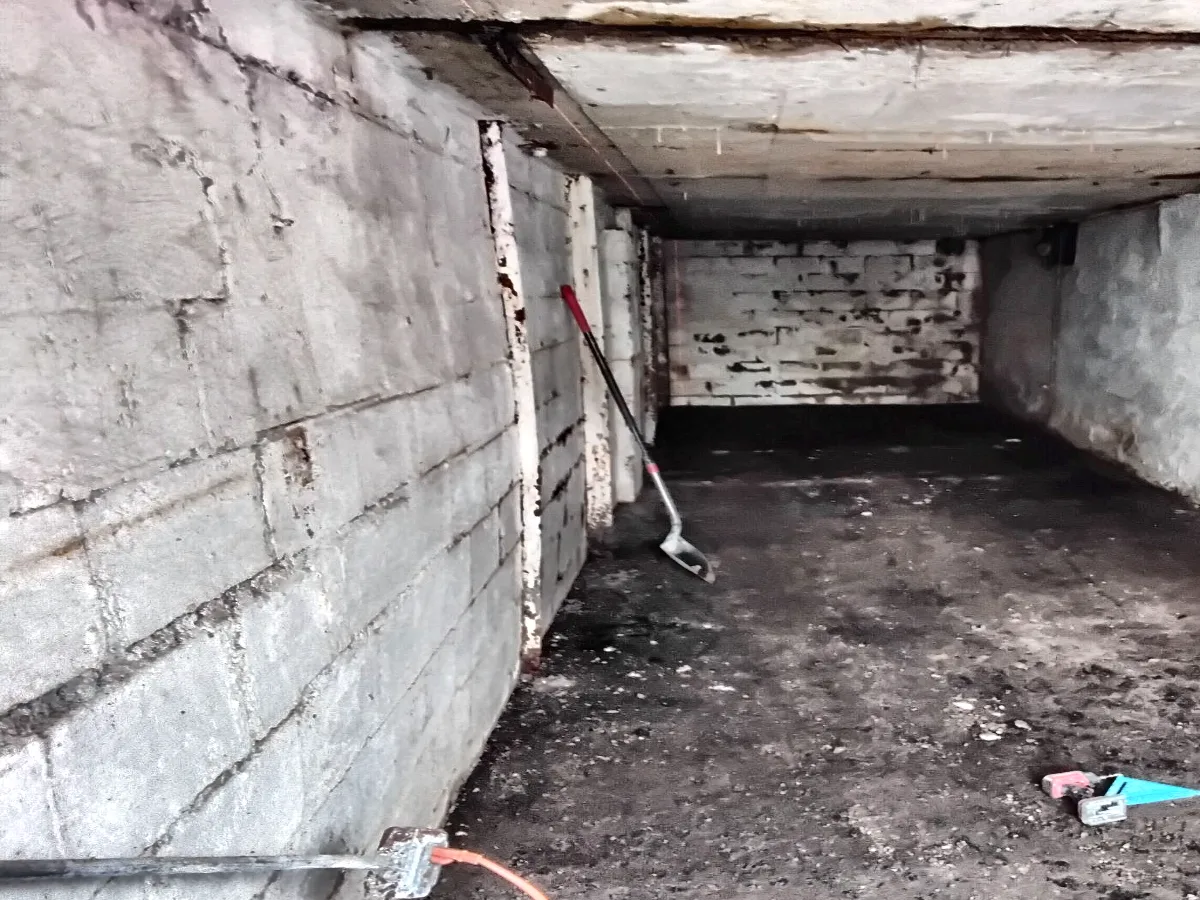
The wall as I found it — bare block, nothing holding it.
After
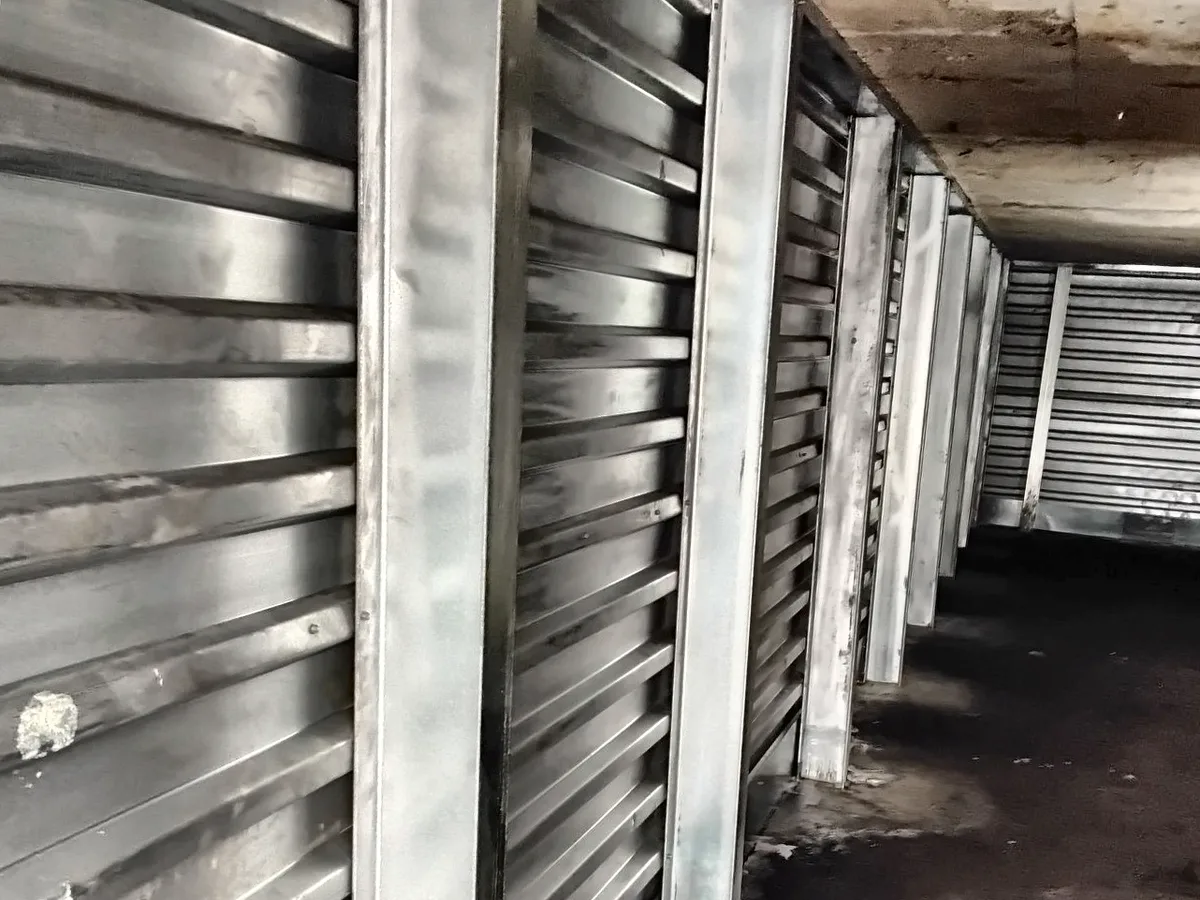
Full-height galvanized steel braces, anchored top and bottom.
I inspected this one and designed the fix; a licensed & insured certified dealer crew installed it.
Warning signs
Some of these are cosmetic. Some mean your house is actively moving. Here’s how to tell the difference — though the honest answer is I need to see it in person to know for sure.
Usually cosmetic (but worth watching)
- Small vertical hairline cracks in poured concrete walls
- Shrinkage cracks that appear shortly after a house is built
- Minor cracks that haven’t changed in years and don’t leak
Usually structural — call me
- Stair-step cracks in a block (cinder block) foundation wall
- Horizontal cracks running across a block or poured wall
- A wall that’s bowing, bulging, or visibly leaning inward
- Doors or windows that stick or won’t latch like they used to
- Floors that slope, feel bouncy, or have a noticeable dip
- Gaps opening up at the trim, where walls meet ceiling, or around window frames
- Cracks that are growing wider, or that leak water when it rains
If you’re not sure which category you’re in, that’s a normal thing to be unsure about — that’s what the inspection is for.
What’s happening under your house
Settlement. Soil compresses or washes out under part of the foundation, and that section drops. This shows up as diagonal or stair-step cracking, and often as sloping floors upstairs.
Hydrostatic and soil pressure. After heavy rain or in clay-heavy soil, the ground pushes against your foundation wall with a lot of force — enough to bow a block wall inward over time. This is the most common cause of horizontal cracks and bowing.
Undersized or failing support columns. Older homes especially were sometimes built with columns that were adequate then but are overloaded now, or that have started to lean, rust, or settle themselves, letting the main beam sag.
None of this means your house is falling down. It means something is moving in a way it shouldn’t, and it needs a properly designed fix, not a patch.
How I fix it
I personally inspect and design the fix, then a licensed & insured certified dealer crew installs it. My job is figuring out exactly why your foundation is doing what it’s doing and speccing the right system for it — not guessing, and not selling you more than the problem calls for. Depending on what I find, the design might include:
- Steel push piers or helical piers — driven down to load-bearing soil or bedrock to stabilize and, where possible, lift a settling foundation
- Wall anchors — used to stop a bowing wall from moving further and gradually straighten it over time
- Steel I-beam wall braces — installed against a bowing wall from the inside where anchors aren’t an option
- Carbon fiber straps — for walls with minor bowing, reinforcing without excavation
- Adjustable steel support columns — replacing or supplementing undersized columns to properly support the main beam
- Slab lifting — for sunken concrete slabs that have settled apart from the foundation itself
Every one of these is a different tool for a different problem, and picking the wrong one is how homeowners end up paying twice. That’s the part I do.
Why homeowners and agents call me
I’m a Certified Structural Inspector through Supportworks, Inc. and a Certified Basement & Crawlspace Inspector through Basement Systems, Inc. — I’ve done this enough times to know what I’m looking at and to say plainly when something isn’t a real problem.
I also work regularly with real estate agents and home inspectors on active deals — inspection contingencies, buyer concerns, pre-listing repairs — where a clear, honest assessment can keep a transaction moving instead of stalling it. Over 100 verified 5-star Google reviews and about 10,000 people following the work on Instagram (@ifixbasements) come from doing this the same way every time: look, explain, design, follow through.
Where I work
I estimate foundation and structural repairs throughout New York — all five NYC boroughs, Long Island (Nassau and Suffolk), Westchester, Putnam, Rockland, Orange, Ulster, Dutchess, Sullivan, Greene, and Columbia Counties — as well as northern and central New Jersey (down through Mercer and Monmouth Counties), and Wayne and Pike Counties, Pennsylvania. See the service-area map →
Straight Answers
Frequently asked questions
Are foundation cracks always serious?
No. Plenty of cracks are cosmetic shrinkage cracks that never change. The ones I pay attention to are horizontal cracks, stair-step cracks in block walls, cracks that are widening, or any wall that’s visibly bowing. If you’re unsure, send me a photo or let me take a look.
How much does foundation repair cost?
It depends on what’s causing the movement, how much of the foundation is affected, site access, and which system the fix requires — a couple of wall anchors is a different job than piering an entire corner of a house. I don’t quote a number until I’ve seen it in person; the estimate is free.
Is foundation repair covered by insurance?
It depends on your policy and what caused the damage — coverage varies enough that I’d rather not guess for you. It’s worth a call to your insurance agent alongside your free estimate from me, so you have both answers at once.
Can I sell a house with foundation issues?
Yes, often — but it’s much easier with a documented plan or completed repair than with an open question mark. I work with agents regularly on exactly this situation, whether that’s a pre-listing fix or addressing an inspection finding mid-contract.
Will fixing a bowing wall make it perfectly straight again?
Wall anchors can gradually improve a wall’s position over time, but the primary goal of any of these systems is to stop the movement and stabilize the structure. What’s realistic for your specific wall is something I’ll walk through with you at the inspection.
How long does a foundation repair take?
It depends entirely on scope — a couple of push piers is a different timeline than underpinning a full wall. I’ll give you a realistic window once I’ve designed the fix for your house.
Who actually does the installation?
I handle the inspection and design — I personally inspect and design the fix, then a licensed & insured certified dealer crew installs it. That crew is trained specifically on these systems, and I stay involved through the process.